FAQs
How does this connect to our actual work once the workshop is over?
The creative states that you experience during the workshop process are meant to be a beginning, not a one-off. They are designed to be rewarding enough to entice you to build more creative practice into your daily work routines. The simple breathing and drawing exercises we’ll do together can be done in a few minutes and easily added to the beginnings of key meetings to open up mental and emotional space for more productive time together. Starting with small, brief interventions in the grind of back-to-back meetings can be an entry point into gradually expanding into larger-scale re-structuring of organizational strategies, planning, and culture to make room for more creativity. Over time, these practices could even shape how leaders and organizations show up and collaborate within and across larger movements.
What techniques do you use to get into a creative state?
We can use simple breathwork and drawing exercises to help our nervous systems relax and shift into more open, generative states. These may include four-count breathing, and air-scribbling with both hands, for example.
Do I have to be “artistic” to make a mosaic?
Everyone has innate creativity that can be applied to making a mosaic. There is beauty in everyone’s mosaic-making style—from the most simple or abstract approaches to the most detailed. In a LemonTree workshop, I will support you in finding your style and helping the team collectively produce a beautiful finished product.
Can participants have varying levels of physical ability?
Absolutely. We can design roles in the group activities for everyone, regardless of physical ability.
Why do you use glass in your mosaics?
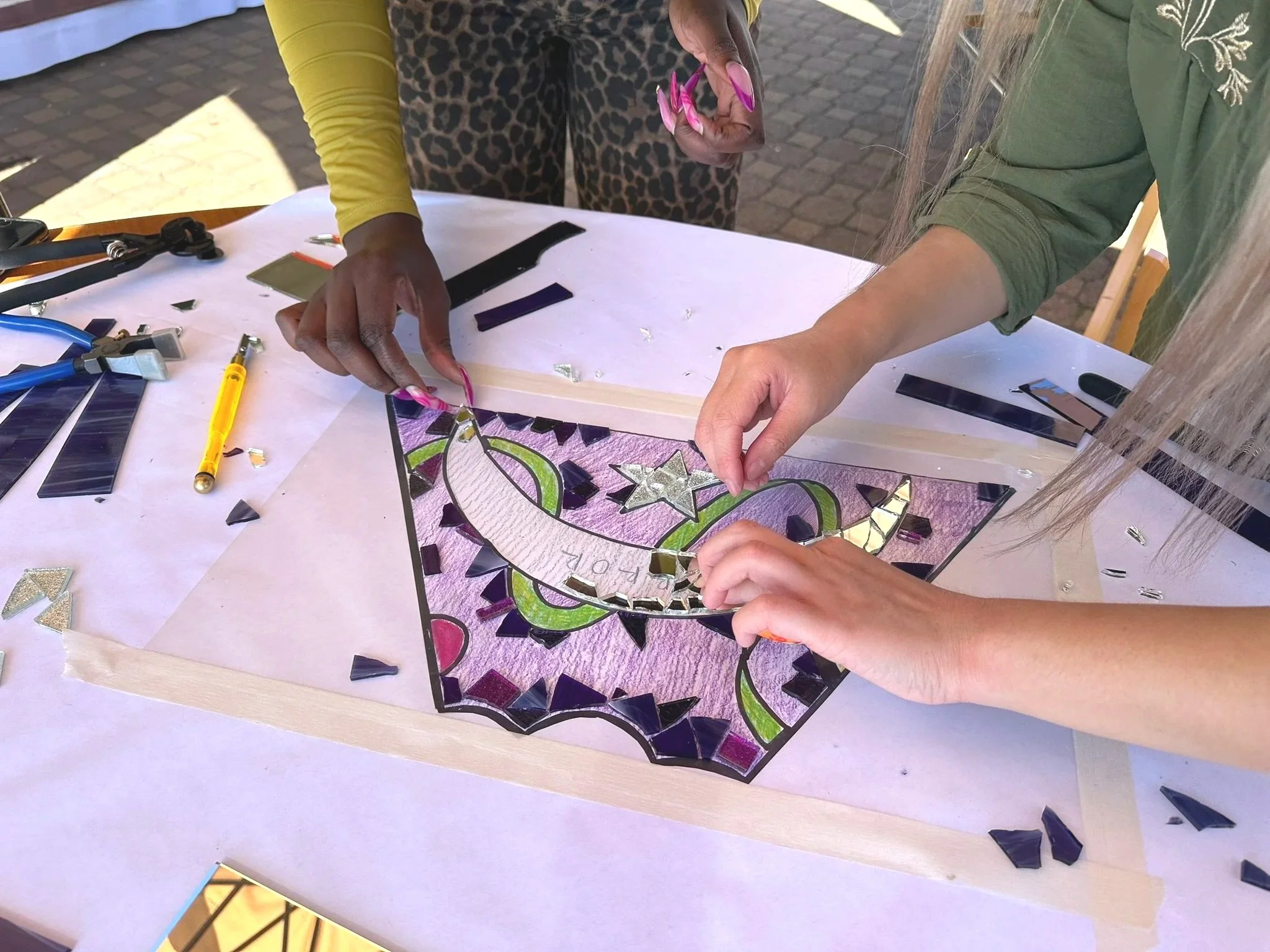
In a LemonTree workshop we will use stained glass as the main material because it’s easy to cut and lighter-weight than tile and comes in more saturated colors. I personally love the sparkle and bling glass and mirror can bring to a mosaic project.
Will I cut myself?
It’s possible that you may get a small nick as you work with glass, and we’ll have band-aids on hand. However, most people usually do not cut themselves during workshops.
What kind of adhesives do you use?
We’ll often use an indirect setting method that allows us to set mosaic pieces (called tesserae) onto contact paper. If we decide to set directly, we would use either an acrylic latex caulk or thin-set adhesive—both can be cleaned off with water.
Can the design sessions and the in-person mosaic-making happen on the same day?
I need at least several days in between the design ideation sessions and the in-person day to finalize the design and purchase the related materials. If you only have one day, we can skip the design sessions and I can independently create an original design for you.
Can the mosaic incorporate our organization’s logo or specific imagery?
Yes—the mosaic can incorporate specific imagery, although the more detailed the imagery is, the more time and expertise it will take to make. Typically—bigger, bolder shapes are easier to make than intricate designs or letters.
Can you travel to us?
Yes.
Is there a maximum or minimum group size?
No. For groups of more than eight, costs will go up based on the additional sets of tools and materials that may need to be purchased.
How do we hang the piece once it’s delivered?
A typical 3x3 glass mosaic will weigh less than 20 pounds. It will come with a wire on the back to make hanging easy. Participants will be responsible for purchasing the type of hangers most appropriate for the wall they will be hanging on. The mosaic should be hung on interior walls and will last virtually forever. It will not be sealed appropriately to be hung outside.